
Is Britain a Democracy?
Keir Starmer has finally resigned after months of speculation, becoming the sixth PM to lose their position in the last decade. With Starmer's successor being confirmed so quickly, the lack of Andy Burnham's democratic mandate begs the question - is Britain really a democracy?
Since Cameron departed from Downing Street, only one person has ascended to Britain's top job through election by the British public. This is particularly concerning when one considers the role that the idea of 'democracy' plays within British (and by extension Western) ideas regarding civilisation. It is upheld as the supreme value that separates us from the 'others' on the global stage, allowing our government, alongside its allies, to frame military action in the parlance of 'liberation' and 'freedom' of those not living under such a system. To this effect, the term 'regime' has been increasingly deployed by our media when speaking of governments that ours deems illegitimate, with military action in the form of 'regime change' routinely justified as a cause for intervention. But what could be less legitimate than the political class bypassing the public when electing the nation's leader? Resignation after resignation, and each time the majority of the British public are left watching from the sidelines as yet another official rises to the top office in the land, handpicked by their own Party. As is, our system of electing governments is deeply flawed.
The opposing camp would argue that internal party leadership races are indeed democratic, as the MPs taking part have been elected by their constituents, but this argument falls short. MPs are elected as representatives, not to act as delegates to throw out PMs when they become unpopular. This process excludes the majority of the public, granting the governing party's members the sole ability to determine the path of the nation. Keir Starmer wasn't just unpopular with the traditional opponents of the Labour Party, but the failures of his government have led to widespread disenfranchisement amongst the political left. As parties are held to a five-year term limit, there is no wholesale change in government unless a snap election is called. This means that no matter how unpopular the ruling party becomes with the public, they can always serve the entirety of the term. The public are effectively held hostage by a decision they made many years ago, no matter how much they grow to regret having made it.
People were in agreement that they wanted Starmer out, but those same people had no control over his successor. Andy Burnham has faced no leadership race, making his ascension to power arguably the least democratic in British history. A leadership race isn't just a measure of popularity, but an opportunity for candidates to be vetted in view of the public. But due to Wes Streeting dropping out of the race, and the failure for any other potential challengers to mount their own charge, Burnham will be rising to a premiership without even having to assert how he intends to govern. He will not face any scrutiny, and he will not have to prove himself in view of the public.
Mandates aren't the only thing being ignored. Starmer repeatedly led his government in violating the principles of his manifesto, directly going against the will of the voters who installed him. Moreover, even after seeking the consent of MPs within the Commons, and twice having their proposal turned down by said MPs, Starmer's government went ahead with the banning of social media for under-16s. What is a representative democracy where those representatives vote on an issue, and the government merely overrides them? Our government, like many others in 'The West', likes to think highly of itself because it regularly describes itself as a 'liberal democracy'. This was not only dishonest, but highlights a greater danger to British civil liberties. This ban was not included within the party's manifesto, and therefore those who did vote for the Labour Party did so without being informed about their intention to do this.
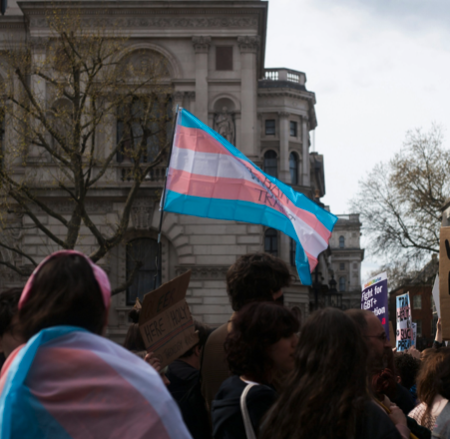
Breaking promises is one thing. Silencing the response to them is another. The only means we have for preventing a government from passing a law we don't like is to protest, but this same Labour government also passed The Crime and Policing Act 2026, a law that places 'a duty on police officers to consider the cumulative impact of repeat protests in the same location which cause significant disruption to the life of a local community.' In an attempt to explain the need for the legislation, the web page for the Act adds that 'while protest is a cornerstone of a democratic society, frequent or prolonged protests in the same area can place substantial pressure on local communities.' In other words, the government can pass any law that they want, and then prevent you from repeatedly protesting that law - your only means of showing your disdain for the law in the first place. 'Substantial pressure' is arguably the most important aspect of protest, as the discomfort of enduring it for so long is intended to force institutions into action. But our government has decided to curtail this right, effectively gutting protest as a form of political participation. How does that separate us from those 'regimes' that our government is constantly framing itself in opposition to?
So, can we really call this a democracy? I don't think so. I think it would be more accurate to describe Britain as a nation with 'democratic features', but to call this a 'democracy' would be inaccurate. Democracy ought to mean more than just voting once every five years. If your government is frequently breaking the contract it asks you to sign to gain legitimacy, it is no longer governing by consent. If your government is restricting your right to protest whenever you like, then you are living under authoritarian rule. Our government is guilty of the above.
Read next
All articles

Every article here started with someone deciding their argument was worth writing down.