
Conditional Dignity: When Trans Lives Become a Debate
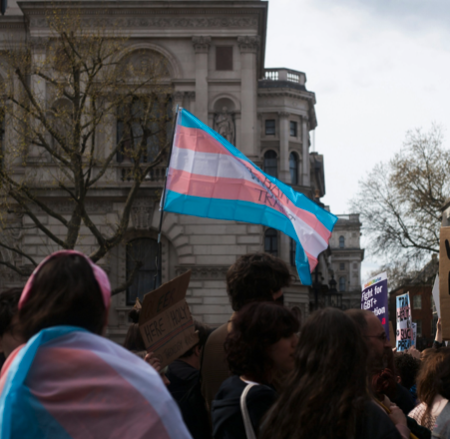
At Mass I heard a Roman Catholic priest describe trans people as ‘evil packaged as good’. The day before, Saturday 25 July, 150,000 people had marched through London for Trans Pride 2026, celebrating trans lives and demanding their dignity be respected.
For Roman Catholicism, the starting point is clear: every person possesses an inherent dignity because they are made in the image of God. Trans people are no exception. Catholic teaching may not recognise transgender identity as trans people understand it, but refusing to affirm someone’s identity does not make their lived gender less real or diminish their dignity. In Britain, what it means to respect that dignity has become increasingly contested in law, healthcare and public life.
Conversion practices make that tension stark. They operate on the premise that transgender identity should be changed, and can involve coercion, psychological abuse and physical harm. Trying to change someone because of an aspect of their identity is difficult to reconcile with dignity understood as inherent, rather than something to be corrected or earned. As Prime Minister, Theresa May promised a ban in 2018, declaring that ‘being trans is not an illness’. Eight years later, the Government has finally published a ‘draft bill’ to criminalise abusive conversion practices, but it is not yet law. A Galop report found that 43 percent of trans and non-binary people had experienced attempts to change or suppress their gender identity.
The principle of inherent dignity is tested again when the care available for trans people is called into question. The Cass Review, published in April 2024, examined the evidence underpinning gender identity services for children and young people, finding limited evidence for some treatments and calling for further research. A month later, the Government introduced a ban on puberty blockers for under-18s (medicines that temporarily pause puberty), which was made indefinite in December 2024. Scrutiny over evidence is legitimate, but a call for more research does not, on its own, justify banning puberty blockers for every child who might benefit from them. Prescribing requires a judgement of benefit against risk, made by clinicians with the patient and their family – a decision a blanket ban cannot substitute for. Withholding appropriate care because of institutional uncertainty rather than patient need sits uneasily with the principle of inherent dignity. Nor should uncertainty over a specific intervention become uncertainty over a child’s identity: dignity is not debatable.
Access to care can be denied outright, or delayed until it is too late. In May 2022, 20-year-old Alice Litman died by suicide after waiting 1,023 days for her first appointment at an NHS gender identity clinic (where specialists assess gender-related distress and consider appropriate care). The coroner found that the delay had ‘contributed to a decline in her mental health’ and identified inadequate mental health support for people awaiting care. A system in which someone can wait nearly three years for an assessment risks treating their wellbeing, and by extension their dignity, as an afterthought.
The consequences of treating dignity as conditional do not stop at institutions. Home Office statistics recorded 3,809 transgender hate crimes in England and Wales in 2024-25, around 52 percent higher than in 2020-21. A TransActual report published in March 2026 found that 98 percent of respondents who experienced transphobia from family over the previous year believed media coverage influenced how they were treated. That is unsurprising: coverage that treats trans identity as a live dispute can give people licence to treat prejudice as reason. That licence does not remain in public debate: it enters homes, families and ordinary lives.
Law can shape how trans people are understood and treated as much as it reflects existing attitudes towards them. In April 2025, the Supreme Court ruled that the terms ‘man’, ‘woman’ and ‘sex’ in the Equality Act 2010 refer to ‘biological sex’ – the sex recorded atbirth. The Equality and Human Rights Commission’s interim guidance on single-sex services survived a High Court challenge in February 2026. An updated ‘Code of practice’ came into force on 5 August this year. The framework permits trans people to be excluded from some single-sex spaces and services on the basis of ‘biological sex’. What the law asks of someone can depend on where they happen to be standing. But dignity is not conferred by a toilet, a hospital ward or a classroom; it is inherent in the person. Institutions can either honour that principle or make it feel conditional.
For Prime Minister Andy Burnham, this is not merely a question of policy but of principle. He has presented himself as an LGBTQ+ ally and has described Catholic Social Teaching (CST) as central to his politics. CST places human dignity at the centre of political life, but does not settle every disagreement about sex and gender. That creates a difficult test for Burnham. He cannot invoke dignity as an abstract principle while leaving its application to trans people unresolved. He has promised to implement the Supreme Court ruling ‘in the fairest and most compassionate way possible’. His challenge is to apply that principle of dignity to how trans people are treated by legislation, institutions and society.
Trans people’s dignity did not begin with a march through London, and it will not end with a court ruling, a code of practice or a change of Prime Minister. It is inherent – which is why dignity is universal. The responsibility now falls on politicians, institutions and wider society to honour that dignity, even when doing so proves politically difficult.
Read next
All articles




Every article here started with someone deciding their argument was worth writing down.