
A "warmth of collectivism"? Certainly not in actual socialist housing
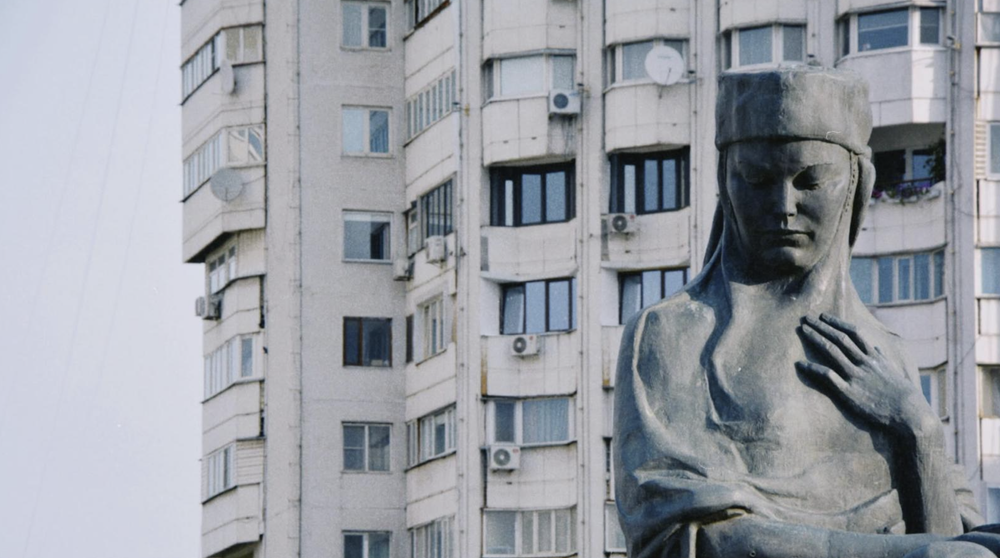
I can’t help but notice the contrasts of the beautiful city of Warsaw. After sitting in Castle Square, I could easily have been led to believe that the city epitomises the beauty of European architecture – it's hard to not feel something for the motley row of colourful houses towered over by the bronze Sigismund III. And yet just a short tram journey separates it from Old Mokotow, an area that, like Castle Square, epitomises an architecture style. A style whose pressing and unfriendly boxes are the single worst mark communism has left on Eastern Europe and one that is rarely talked about.
For someone who has never lived around these monolithic giants of grey they might actually look attractive, particularly in the modern age where anything can be aestheticised and romanticised with playlists. When combined with the hard reality of the housing crisis in the UK, Soviet panelki (and thus socialism as a whole) don’t look too bad at all. After all, it's better to live in an ugly bloc than to be homeless, right? Also, who wouldn't want to live so close to your revolutionary comrades that you can sing communist hymns through the walls to each other?
The problem with this socialist ideal (reminiscent of Kropotkin’s vision of abundance) is that it assumes a continuation of capitalist abundance, just somehow fairly distributed. It’s never considered whether the government that calls itself a rightful representative of the people will actually distribute resources fairly and not decide to neglect public misery and export communism instead.
And yet this is precisely what happened in Warsaw Pact states, for Soviet houses are nothing short of torture chambers for the minds of their dwellers.
Aesthetic unpleasantness is the tiniest of their problems. There's also the bitterness, the possessiveness, the desire to control your flat, the tidiness and light of which contrast so much with the nightmarish staircase. Even locking your door feels so different to locking a house door. Indeed, it feels as though you are fortifying your castle against the monsters lurking in the neighbouring flats. Not a particularly appropriate mood for singing "The Internationale". It takes an outsider, oddly enough, to notice how starkly this private tension sits against the public ideology.
An outsider’s, and yet astonishingly poignant analysis was presented by Peter Hitchens. In his book he mentions how, when he worked as a correspondent in the USSR, people instantly knew he was a foreigner when he held a door for someone on public transport (indeed, you are not supposed to do that). And then he says this:
‘If you could penetrate into the small warm world of a Russian kitchen, where close friends and family gathered… to talk long into the night, you found an intense, civilised and courteous society of immensely knowledgeable and well-educated people, quite capable of common decency once they were in a private society controlled and known by themselves.’ (p. 66)
But how could such a mentality have been fostered? When you arduously attack private property and outlaw free exchange, people hold on so much to the little property they do have that public spiritedness and cordiality towards their fellow citizens are off the table. In a world that is supposedly fairer and yet synonymous with squalor, everyone seeks to be a king of their flat. What other options do you have? It’s not like you can vote against the party in power. And why would you? They are already perfectly representing you, they have a book that says so! If you disagree, you obviously must have a false consciousness.
The impact of life in and among boxes on post-Soviet public consciousness cannot easily be gauged from history textbooks. The mechanism of property churning up bitterness and self-fortification has permeated more than just the behaviour of its residents. Its mark can also be found in Eastern European language, a phenomenon that the Russian poet Vyazemsky called "a people's confession". A term for these houses that is quintessentially Russian in its dark humour is “cheloveinik” ("human hill", a blend of "human" and "ant hill"). Similarly, no one would say "old decrepit house" when they have "stalinka" and "khrushchevka" at their disposal ("a building built under Stalin/Khrushchev", respectively). Just imagine if people referred to old and ugly British houses as Macmillankas.
The same is true of art and culture, where references to khrushchevkas are omnipresent. It’s creepypasta centered on the urban horror of the aforementioned neighbouring flats that persists on the Russian-speaking Internet to this day. It’s post punk bands focusing on urban imagery like Molchat Doma that blew up even the Western Internet. It’s popular video games like Russian Horror Story or the atmospheric It’s Winter that best capture the muffled dread of wandering through the gullet of a grey cheloveinik. This horror imagery is not quite the legacy you would expect from an era that defeated the greed and atomisation of the old order and replaced it with collectivism.
Read next
All articles



Every article here started with someone deciding their argument was worth writing down.