
The US and the UK: is the Special Relationship Finally Breaking?
For decades the US and the UK have shared one of the world's closest political and military alliances, known as the ‘special relationship’. Disputes between the two sides have raised questions, with the foundations of the special relationship facing pressure.
Recently, questions have been raised surrounding the strength of the special relationship. Political instability at Westminster has made it increasingly difficult to maintain consistency with the ties between the two countries, with various previous Prime Ministers disagreeing with the US President, Donald Trump, over trade and foreign policy. However, strong institutional ties between the two countries maintain the strength of the special relationship. Despite the recent tensions, these ties make the complete deterioration of US-UK relations less likely.
The origins of the Special Relationship emerged through Winston Churchill, who popularised the ‘special relationship’ term in his famous 1946 'Sinews of Peace' speech, built on the need to unite the two countries against the threat of the USSR. The term was subsequently adopted by successive governments who were keen to emphasise Anglo-American relations. Built on deep intelligence, defence, and security ties, the US and the UK have formed the basis of Western co-operation throughout the Cold War. The relationship between the two countries was never based solely on diplomatic friendship, but on a shared interest in protecting Western security.
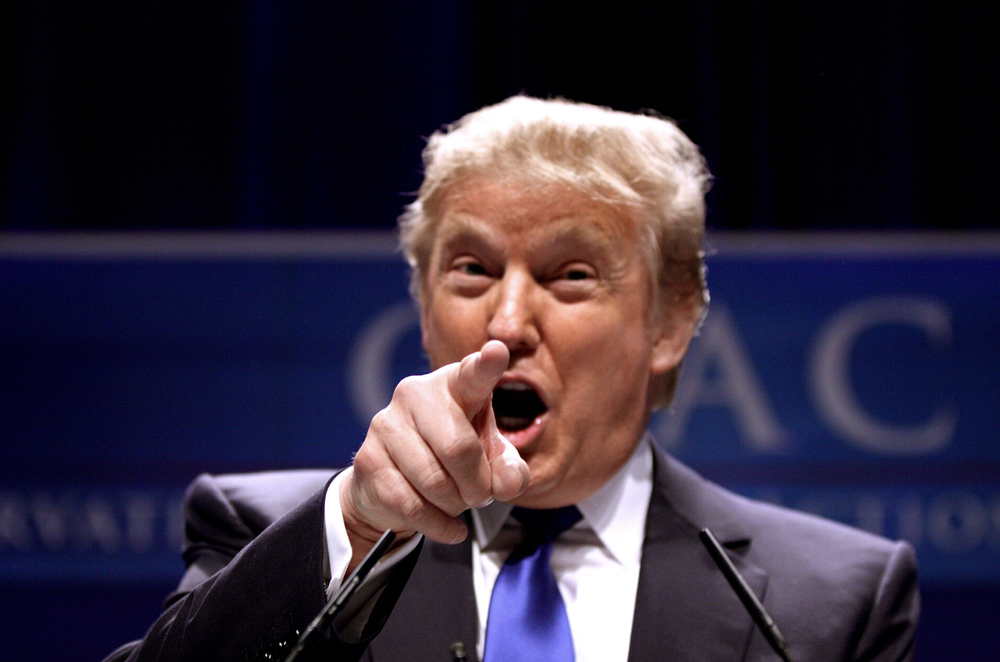
Recent developments, particularly over the last two years and the respective elections of Keir Starmer and Donald Trump, have sparked debate about whether this relationship is coming under increasing strain. Disagreements over the war in Iran exposed differences between the two countries, with Starmer initially deciding not to support offensive US military action, leading to Trump labelling Starmer as being 'no Winston Churchill' in late February 2026.
The disagreements suggest that the special relationship is undergoing a period of significant change rather than simply experiencing another temporary period of political tensions. Historically, the special relationship has the foundations to survive disagreements between the leaders of the respective countries. But the growing disparity between Washington and London now concern wider questions surrounding foreign policy and European security. This has fundamentally raised the possibility that there is a scenario in which the two countries no longer share the same strategic priorities as they once did. The special relationship therefore may be better understood as one which is under re-negotiation rather than being completely broken entirely.
Although Starmer's resignation in July 2026 represented a clean slate between ties with President Trump, refreshing hope for the special relationship, Starmer's successor Andy Burnham allowed for tensions to resurface. Burnham has previously stated that 'Trump would not be welcome in his city'. during his time as Manchester Mayor. Burnham asserted that he would disagree with the US President in public if necessary, prioritising national interest over foreign affairs, and strongly sticking to his predecessor's policy of not backing US offensive operations. This has caused even greater divergence between Downing Street and the White House. Burnham places greater emphasis on a pro-European approach to foreign policy compared to previous Prime Ministers’ willingness to accommodate Trump’s administration
This has been evident through the different approaches toward the war in Ukraine. The UK continues its strong support for Ukraine, a stark contrast to the US' more reserved approach. But the clearest indication that the special relationship is facing more fundamental challenges has emerged through tensions over the Falkland Islands. The UK claimed sovereignty over the Island in the late 17th century, having continually held it since 1833, although Argentina continues to dispute this claim. In late August 2026, suggestions surrounding the US stance emerged after Trump suggested that he would reconsider US support for Britain's sovereignty over the Falkland Islands, in a move that is suggested to potentially strain the special relationship between the US and UK.
The US willingness to re-evaluate its support for long-standing British territory due to disagreements over defence policy demonstrates a significant shift in the traditional dynamics of the special relationship.The significance of the Falklands dispute extends the belief in a partial eradication of trust between the two nations. Historically, Britain has been able to rely on US support for its wider security strategy. However, the possibility that Washington may reconsider its position due to disagreements over British defence spending commitments suggests that US support is no longer unconditional.
Suggestions surrounding the US stance emerged after Washington believed that Britain would fail to meet its defence spending commitments, with UK Chancellor John Healey preparing to drop Britain's commitment to devote 3% of its GDP to defence spending by 2030 in his projected first budget. The various disagreements between the two special relationship countries suggests that the relationship is facing a more fundamental challenge than simply a disagreement between two political leaders. If Washington and Downing Street continue to hold disagreements over the security of Europe, then the foundations of the relationship may face a challenge of being maintained.
Aside from the emerging tensions between the personal relationship of Donald Trump and Andy Burnham, the special relationship extends far beyond these personal grievances. The US and the UK remain closely connected through defence and security, creating institutional ties which are tough to dismantle even through disagreements between the two political leaders.
Both countries remain members of NATO, maintain a close partnership through the Five Eyes alliance, and are still governed by the US-UK Mutual Defence Agreement signed in 1958.The Five Eyes alliance itself is significant, allowing co-operation into ‘the most exclusive intelligence sharing club in the world’.This helps to suggest that the special relationship is bound by strong foundations and a fundamental reliance upon each other, which has remained firm despite what the disagreements between Trump and Burnham may suggest. It is clear that the special relationship cannot solely be defined by political viewpoints from the two respective leaders. It is not to say that these alliances have not come under scrutiny.In November 2025 the UK quietly suspended intelligence co-operation with the US in the Caribbean. This followed after the UK refused to co-operate with Trump’s military campaign against ships accused of drug trafficking, believing that it was not to be in line with international law.
Although there is evidence to support the fragmentation of the special relationship, it would be premature to conclude that the special relationship is broken entirely. Disagreements between the two countries are not new. Divisions have existed throughout the special relationship's history. The Vietnam War, for example, demonstrated fundamental disagreements between the two countries. Then Prime Minister Harold Wilson distancing the UK from the US over key issues involving foreign policy, resisting British military involvement despite ongoing pressure from President Lyndon Johnson.
However, with Donald Trump taking an unpredictable approach to foreign policy decision making, leader Andy Burnham may face greater pressure to cater to the US President's needs to maintain a healthy relationship between the two governments. Trump’s approach is staunchly different from the more traditional expectations of a US President. Trump’s willingness to reconsider his support for British sovereignty over the Falklands, as well as his subsequent lack of co-operation and autonomous approach has risked America walking away from Global Democracy.This creates great uncertainty for the UK Government, with decisions made in London having to factor more closely the consequences surrounding Trump’s willingness to continue this relationship
Read next
All articles


Every article here started with someone deciding their argument was worth writing down.