
Has Britain become ungovernable?
Britain has never appeared more politically turbulent. With the country cycling through seven Prime Ministers since the Brexit referendum in 2016, as well as repeated leadership contests and economic crises, it is easy to see why there has been a steady decline in public confidence in politics, with just 14% of Brits saying they trusted politicians in a 2025 poll (Electoral Commission, 2025), highlighting the extent of public disillusionment. Elections are producing ever more volatile results, populist parties are reshaping the political sphere, and each new government stumbles from one crisis to the next. With all of this in mind, it is perhaps not unfair to argue that Britain has become ungovernable. However, I instead believe that this apparent ungovernability is less the problem itself than the visible consequence of much deeper political and economic pressures. To put it simply, Britain is not an ungovernable country, but rather a country that has become much more challenging to govern. A deeply fragmented electorate, paralysing economic constraints, as well as a quickly evolving digital landscape have transformed the nature of governance. Therefore, the real challenge facing our leaders is the ability to adapt to a more complex and demanding political environment.
That is not to say that those believe Britain has become ungovernable are without reason, or that their arguments are not compelling, as our politics is no longer dominated by two catch-all parties competing for the centre-ground. Rather, Reform UK has ripped this traditional system to pieces, while the Liberal Democrats and Greens continue to draw substantial support, with no party polling at over 25% in an April 2026 Ipsos poll. This leaves us with a system where voters are more fragmented than perhaps ever before. Incumbents are somehow expected to prioritise young adults, cosmopolitan graduates, pensioners in middle England, nationalists in Scotland, and the traditional 'red wall' in the North, all whilst keeping taxes low, adequately funding the welfare state, and keeping immigration levels under control. When put simply like this, it is clear that expectations placed on incumbent leaders are entirely unfeasible.
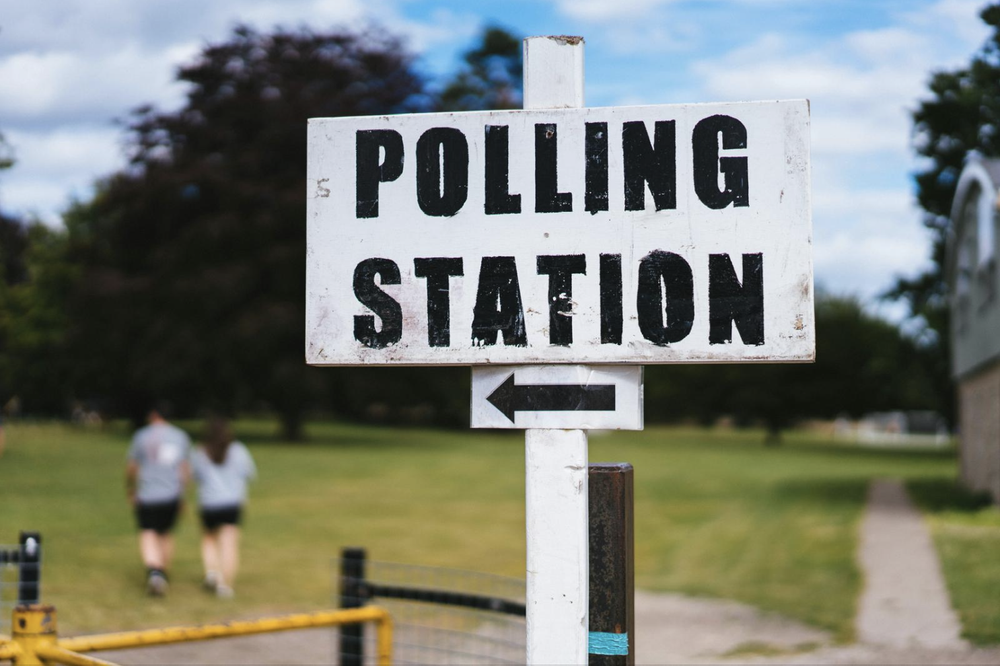
This being said, attributing Britain's challenges to 'ungovernability' feels intellectually lazy, and risks mistaking frustration for diagnosis. Despite many difficulties, the pillars upholding this country's democracy continue to function; we still conduct in free and fair elections, governments continue to pass legislation with scrutiny from parliament, courts hold ministers accountable, and unlike certain other democracies, peaceful transfers of power remain the norm. In a world that appears to be increasingly defined by chaos and unpredictability, these are not the traits of a country that ceases to be governable.
The real challenge is that governing Britain now requires politicians to make increasingly difficult choices that they are of course reluctant to make. Economic stagnation since 2008, an ageing population, a severe lack of housing, among a myriad of other issues, have frankly left almost no room for manoeuvre. As Keir Starmer has repeatedly discovered during his tenure, every policy decision with the backdrop of such a political climate creates new enemies. Any tax increase alienates an entire section of the electorate, as was seen in the case of farmers' inheritance tax and pensioners' winter fuel payments (Asthana, 2025). Simultaneously, fiscally cautious economic policies, such as the initial decision to uphold the two-child benefit cap, risked alienating more progressive members of the electorate. Far too often, it seems impossible for incumbents to win.
Too frequently, our leaders have buried their heads in the sand and acted as though this is not the case. Numerous governments, namely those led by Keir Starmer and Boris Johnson, have promised a Scandinavian-style welfare state coupled with American tax levels. During the 2019 general election campaign, Johnson promised to recruit 50,000 new nurses, build 40 new hospitals, and increase police numbers while pledging not to increase the rates of income tax, national insurance or VAT (Conservative Party, 2019). Likewise, Starmer committed to building 1.5 million homes and to reduce NHS waiting lists whilst rejecting the idea of raising income tax, national insurance or VAT (Labour Party, 2024). This presents a consistent pattern; our politicians speak of profound economic transformation without having the bravery to acknowledge the difficult, and perhaps painful reforms that will inevitably be necessary to achieve it.
Social media has provided politicians with an even greater mountain to climb. Every policy announcement is deconstructed within minutes, every minor mistake amplified, and every compromise presented as betrayal or weakness. Incumbents therefore take on a firefighting role; rather than pursuing long-term ambitions and reforms, they feel compelled to respond to the outrage of the day. This overwhelming pressure to deliver voters instant results fundamentally clashes with the real problems this country faces, whether it be housing, the NHS, or productivity. These are challenges that will take years to fix, not weeks or months.
Concluding that Britain is 'ungovernable' therefore lets our politicians off the hook. It suggests that failure is inevitable as rather than the consequence of years of incompetent leadership, unachievable pledges, and fear of tackling difficult problems. Britain does not require constitutional revolution, but leaders brave enough to be honest with the public about the path that lies ahead. Rebuilding voters' faith in politics will depend less on catchy slogans and grand promises than on competent delivery and a readiness to look beyond tomorrow morning's headlines. Britain is without doubt more difficult to govern than it was for the previous generation, but this is not to say that it is impossible.
Sources:
Electoral Commission (2025) Public attitudes to elections and democracy: 2025 findings.
Ipsos (2026) Reform hold 6-point lead over Labour and the Conservatives. Political Monitor,
17 April.
Anushka Asthana (2025), The Times. Starmer-Reeves bond is being sorely tested.
Conservative Party (2019) Get Brexit Done: Unleash Britain's Potential. Conservative and
Unionist Party Manifesto 2019. London: Conservative Party.
Labour Party (2024) Change: Labour Party Manifesto 2024. London: Labour Party.
Read next
All articles


Every article here started with someone deciding their argument was worth writing down.